Written by Leo Liang · Last reviewed 2026
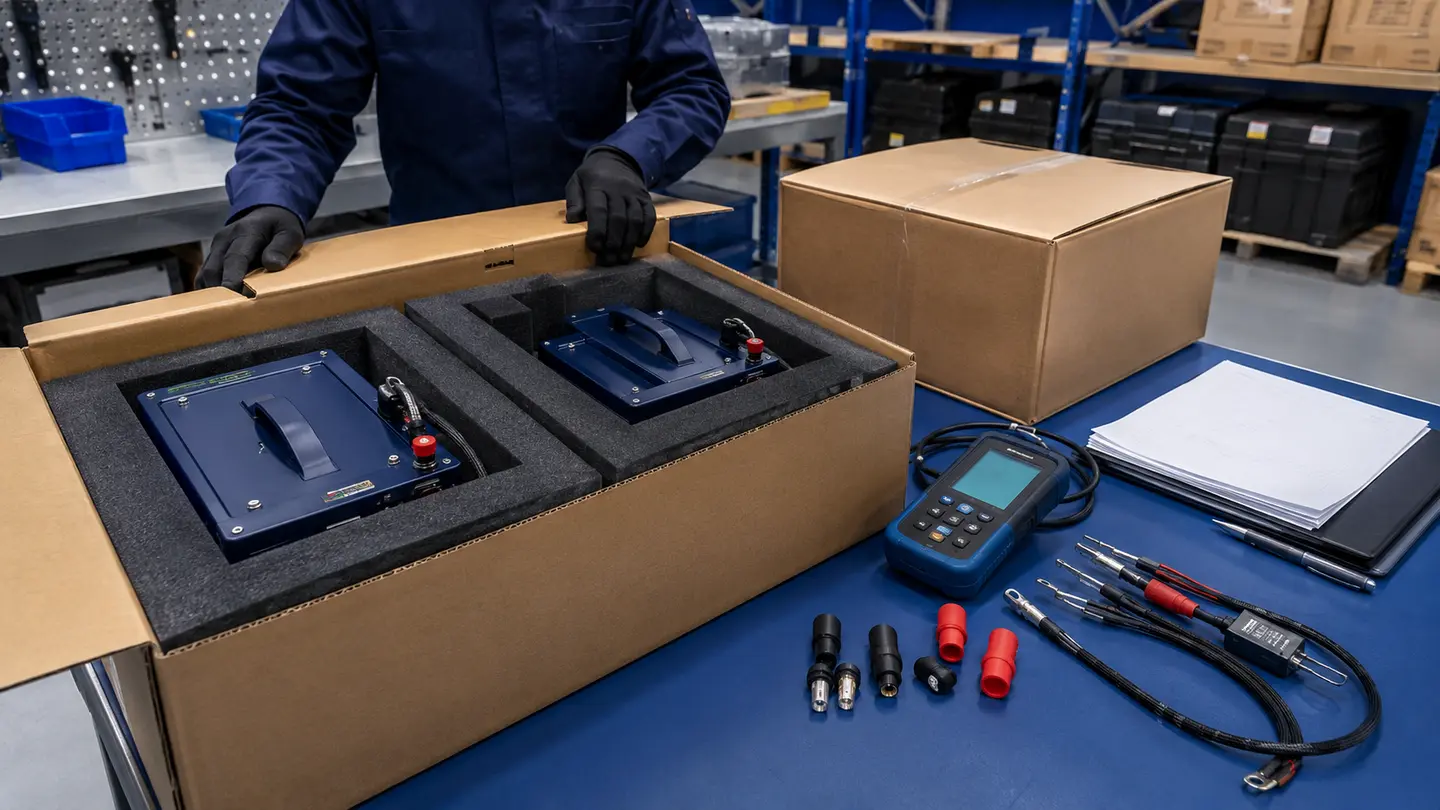
A robot battery is not a difficult thing to have made in China. It is a difficult thing to get out of China. Teams routinely specify a pack, approve a sample, pay for production, and then discover that the freight route they assumed is not available to them.
UN38.3 is not optional
Every lithium cell and pack shipped internationally needs a UN38.3 test report covering altitude simulation, thermal cycling, vibration, shock, external short circuit, impact, overcharge and forced discharge. A reputable pack manufacturer will already have this for their standard cells. A custom pack configuration may need its own report, and that testing takes weeks and costs money.
Ask for the report at quotation stage, not after the sample is approved. Check the date and check that the configuration on the report matches what you are actually buying.
Watt-hours decide your options
The thresholds that matter are set by capacity, and they change what is possible:
- Small cells and packs move relatively easily by air with the right documentation and packaging
- Larger packs face air cargo restrictions, carrier-specific refusals, and state-of-charge limits
- Very large packs are realistically sea freight only, which means adding four to six weeks to your schedule
A robot pack sized for a few hours of operation frequently lands in the range where air is possible but expensive and carrier-dependent. This is worth knowing before you finalise the cell count.
State of charge
Shipping regulations generally require lithium ion cells to be transported at a reduced state of charge, commonly around 30 percent. Your pack will arrive partly discharged and that is correct, not a fault. Plan a charging step into your receiving process.
Packaging and labelling
Packs need to be packed to prevent short circuit and movement, in packaging that meets the relevant performance standard, with the correct hazard labels and a shipper’s declaration where required. A factory that has exported batteries before will handle this. A factory doing it for the first time will get it wrong, and the shipment will be refused at the airport with the cost falling on you.
Decide the freight before you finalise the design
The practical sequence that avoids most of this:
- Decide your acceptable lead time. If you need it in three weeks, sea freight is out and that constrains pack size
- Get a freight quote for your intended pack configuration before approving the design
- Confirm the factory has an existing UN38.3 report matching that configuration
- Confirm they have shipped this pack type to your destination country before
- Only then approve the sample
What we do about it
On any battery line, we quote the freight at the same time as the part, and we confirm the UN38.3 position before you approve a sample. If your pack size makes air freight impractical, you hear it in the first reply.
Working on something in this area? Send us the BOM line and we will quote it. No obligation, and we will tell you if you should buy it locally instead.
Send one line and see what comes back.
You do not need a finished BOM to start. Send the single part that is currently blocking you and we will quote it. It costs you an email and tells you more about us than this page can.